



Two-Post & Four-Post Car Lift Maintenance: The Spare Parts That Keep Your Garage Running

Two-Post & Four-Post Car Lift Maintenance: The Spare Parts That Keep Your Garage Running
A worn hydraulic seal or a cracked safety lock isn't a reason to replace your car lift. Here are the parts that actually fail on two-post and four-post lifts in Kenya.
Hydraulic Cylinder Seals
These are the first thing to go on lifts that see daily use. A worn seal shows up as slow descent, a hissing sound, or a slight drop after the lift has settled.
Fix: Replace the seal kit — a fraction of the cost of a new cylinder.
Safety Locks and Pawls
These are the mechanical teeth that stop a lift from free-falling if hydraulic pressure is lost — they wear from repeated engagement.
How to tell: if it does not click cleanly into place at every notch, that's your sign.
Fix: Replace it rather than adjusting around it — this is a safety part.
Arm Restraint Pins and Pads
The rubber pads that cradle the vehicle wear flat over time. Worn pads let the arm shift slightly under load — exactly the kind of thing to catch before it becomes a bigger problem.
Power Unit Motor Brushes
On electro-hydraulic power units, brush wear shows up as a lift that is slower to rise than it used to be, or one that struggles at the top of its travel.
Fix: Brushes are a cheap, quick swap.
Keeping a small stock of seal kits, safety locks, arm pads, and motor brushes sized to your lift model means most faults get fixed same-day instead of taking your bay out of service for a week while a part ships in.
Browse our workshop jacks and lifting equipment range, our hoists, including RoadBuck four-post and two-post lifts, or get in touch about spare parts for the model you already own.
Frequently Asked Questions
What's the first thing to check if a car lift is dropping slowly under load?
Start with the hydraulic cylinder seals — a worn seal is the most common cause of slow descent, a hissing sound, or a slight drop after the lift has settled.
How do I know if a safety lock needs replacing rather than adjusting?
If the lock does not click cleanly into place at every notch, replace it. Safety locks are not a part to adjust around — they're what stops the lift free-falling if hydraulic pressure is lost.
Why is my lift slower to rise than it used to be?
On electro-hydraulic power units, this usually points to worn motor brushes rather than a failing motor — brushes are an inexpensive, quick swap.
Do worn arm pads actually matter if the lift still holds the car?
Yes — flattened pads let the arm shift slightly under load. It's a small fault, but exactly the kind worth catching before it becomes a bigger one.
What to Do Next
Tell us the model and what it's doing (or not doing) and we can usually narrow down the likely part over WhatsApp before you book a visit.
Not sure which part your lift needs? Send us the make and model and we'll help you identify it.
Prices and stock change - message us for today's rate and availability.
Recent Posts
Solar Water Heater Not Heating Properly? The Parts That Actually Fail
Solar Water Pump Losing Power or Not Pumping? 5 Spare Parts to Check
Car Wash Machine Losing Pressure or Leaking? The Spare Parts to Check
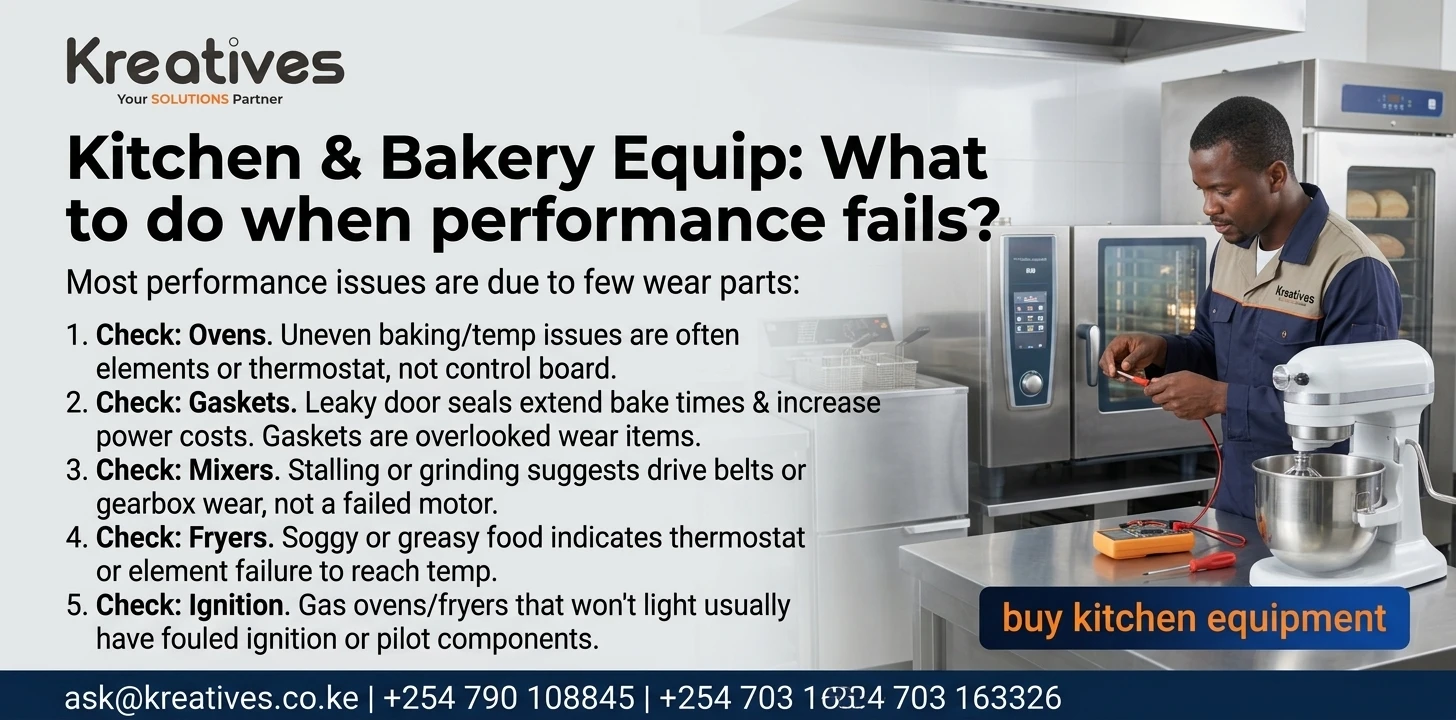
Commercial Oven, Mixer or Fryer Acting Up? What to Check Before Calling a Technician

Drip Irrigation Clogging or Uneven Flow? The Fixes That Actually Work
Why Your Water Pump Lost Pressure - And the 5 Spare Parts That Usually Fix It
Generator Won't Start? Run Through These 6 Spare Parts Before You Call a Technician