


The Ultimate Guide to Borehole Solar Water Pump Prices in Kenya: A Sustainable Solution for Your Water Needs
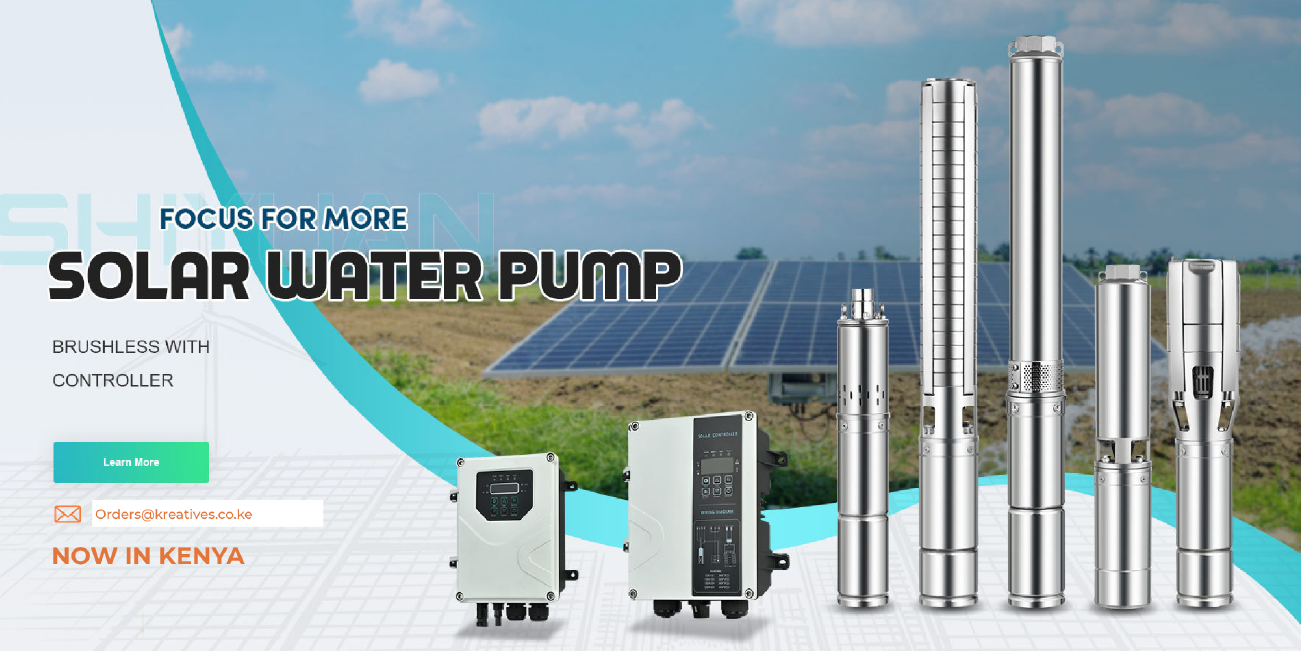
Borehole Solar Water Pump Prices in Kenya: Complete Guide
What a borehole solar pump costs, how to size one for your depth and demand, and the faults you can fix yourself before calling a technician.
Why Borehole Solar Pumps Are Booming in Kenya
Two things changed the economics of solar pumping in Kenya over the last few years: the price of solar panels fell sharply, and the cost of grid electricity and diesel kept rising. The result is that a borehole solar pump now pays back its own cost in 2–4 years on most Kenyan farms, compared with a diesel pump.
The other reason is reliability. A solar borehole pump has no fuel to buy, no oil to change, no engine to service, and no dependence on KPLC. For a farm far from the grid, it is often the only practical way to get consistent water without a diesel pump.
What Drives the Price of a Borehole Solar Pump
| Factor | Impact on Price |
|---|---|
| Borehole depth / total head | Deep boreholes need submersible pumps with higher lift — prices rise sharply with depth |
| Required daily volume | Higher flow means larger pump and more panels |
| Solar array size | Panels are 30–50% of total system cost |
| Controller type | MPPT controllers cost more but extract more power from the panels |
| Pump quality (stainless steel vs plastic) | Stainless steel pumps last 2–3× longer but cost 40–60% more |
| Installation (borehole access, cable, piping) | Deep boreholes need more cable and heavier pipe |
Current Borehole Solar Pump Prices in Kenya (2025)
| System | Typical Range | Best For |
|---|---|---|
| Small submersible pump, 30–50m head | KSh 90,000 – 180,000 | Shallow boreholes, small domestic demand |
| Mid-range submersible pump, 50–100m head | KSh 180,000 – 350,000 | Standard domestic boreholes, small farms |
| Deep borehole pump, 100–150m head | KSh 350,000 – 600,000 | Deeper boreholes, larger farms, livestock |
| Very deep borehole pump, 150m+ head | KSh 600,000 – 1,200,000+ | Deep boreholes, commercial farms |
| Complete kit (pump + panels + controller + cable) | KSh 250,000 – 1,500,000+ | Turnkey installation |
Add KSh 40,000–120,000 for installation, depending on borehole access, depth, and distance to the tank.
How to Size a Borehole Solar Pump
Four numbers matter:
- Static water level (m): the depth from ground level to the water surface when the pump is off.
- Drawdown (m): how far the water level drops when the pump is running.
- Discharge height (m): the vertical lift from the borehole head to the top of the storage tank.
- Horizontal pipe run (m): the distance from the borehole to the tank.
Total head = static water level + drawdown + discharge height + (horizontal run × 0.1). Add 10–15% for friction. Then work out daily volume and divide by peak-sun hours (typically 5) to get the required flow rate.
Common Borehole Solar Pump Problems & Solutions
1. Pump runs but no water reaches the tank
Most likely causes: water level dropped below the pump intake (dry run), check valve failed, or pump is undersized for the head.
Fix: Check water level first. If the pump is running dry, lower the pump slightly or install a dry-run protection sensor. If the check valve failed, replace it — this is the most common cause of no-water on a running pump.
2. Pump runs only during peak sun (midday), not morning or afternoon
Most likely causes: undersized solar array, or PWM controller instead of MPPT.
Fix: Add more panels to the array, or upgrade to an MPPT controller. MPPT controllers typically extend the usable pumping window by 1–2 hours per day.
3. Pump stops with a fault code on the controller
Most likely causes: dry run (water level dropped), over-voltage (too many panels in series), or over-temperature.
Fix: Note the fault code, power off and on. Dry-run faults usually clear when water returns. Over-voltage faults require removing one panel from the string. Over-temperature faults usually indicate the pump is running at its limit — consider a larger pump.
4. Pump output has dropped over time
Most likely causes: worn impeller, dirty panels, or water level in the borehole has fallen.
Fix: Clean panels first. Check the static water level against your original measurement. If both are unchanged, the impeller is worn — see our water pump spare parts category.
5. Pump makes a loud noise or vibration
Most likely causes: pump is not centralised in the borehole (rubbing against the casing), or a bearing is failing.
Fix: Pull the pump and check for damage to the casing. Install centralisers if the pump is touching the borehole wall.
6. Controller is hot to the touch
Most likely causes: poor ventilation, or the controller is oversized for the application and running inefficiently.
Fix: Ensure at least 30cm clearance around the controller and shade it from direct sun. Check that the controller's rated current matches the pump.
Frequently Asked Questions
How much does a borehole solar pump cost in Kenya?
A complete system for a typical 60–100m borehole costs KSh 250,000–500,000 installed. Deeper boreholes or higher-volume pumps cost more.
Can I use my existing borehole with a solar pump?
Yes — most boreholes can be retrofitted. The key checks are borehole diameter (to fit the pump) and the water level and recharge rate.
Do I need batteries with a borehole solar pump?
No. The standard approach is to pump into a storage tank during the day and draw from the tank whenever needed. Batteries are rarely used with borehole solar pumps because they add cost and reduce reliability.
How long do borehole solar pumps last?
Quality submersible pumps last 8–15 years. The impeller and seals are the wear items. Stainless steel pumps last longer than plastic ones in abrasive or mineral-rich water.
What happens during cloudy weather?
The pump runs less or stops, but your tank should be sized to cover 2–3 days without pumping. For continuous supply, a hybrid system with grid or generator backup is the answer.
Can I run a borehole solar pump and a submersible electric pump from the same borehole?
Not recommended — two pumps in one borehole usually interfere with each other. Choose one primary pump and size it correctly.
What to Do Next
Send us your borehole depth, static water level, required daily volume, and the height to the tank. We will recommend the right pump, panel array, and controller for your site.
Browse our solar water pump range, or our full water pumps range for conventional alternatives.
Not sure which part or model fits your setup? Send us your equipment or requirement and we'll point you in the right direction.
Prices and stock change - message us for today's rate and availability.
Recent Posts

Solar Water Heater Not Heating Properly? The Parts That Actually Fail
Solar Water Pump Losing Power or Not Pumping? 5 Spare Parts to Check
Car Wash Machine Losing Pressure or Leaking? The Spare Parts to Check

Commercial Oven, Mixer or Fryer Acting Up? What to Check Before Calling a Technician

Drip Irrigation Clogging or Uneven Flow? The Fixes That Actually Work
Why Your Water Pump Lost Pressure - And the 5 Spare Parts That Usually Fix It
Generator Won't Start? Run Through These 6 Spare Parts Before You Call a Technician