


The InfiniSolar V 1K-5K

InfiniSolar Hybrid Inverter: What It Does and When It Makes Sense
The InfiniSolar range is one of the most flexible hybrid inverters on the Kenyan market. Here is what it does, how it differs from a standard inverter, and the problems to watch for.
An InfiniSolar hybrid inverter combines three devices in one box: a solar charge controller (MPPT), a battery inverter/charger, and a grid-tie inverter. That means a single unit can manage solar panels, batteries, the grid, and your load — with configurable priority between them.
This makes it ideal for Kenyan users who have an unreliable grid and want to reduce their electricity bill, but also need backup power when the grid goes down.
What InfiniSolar Inverters Do
- Solar priority: Use solar first, charge batteries, export excess to the grid.
- Battery priority: Use solar to charge batteries, then use batteries at night.
- Grid priority: Use grid power, keep batteries charged, and use solar as backup.
- Grid-tie mode: Feed excess solar into the grid to offset your bill (where net metering is available).
- Off-grid mode: Run entirely off solar and batteries with no grid connection.
Sizing an InfiniSolar Inverter
Choose the inverter size by the peak load you need to run simultaneously:
- 3kW: Lights, TV, fridge, laptops, phone charging, small pump. Suitable for a small household.
- 5kW: Adds washing machine, microwave, medium pump, larger fridge.
- 8kW: Adds air conditioning (1 unit), borehole pump, larger household loads.
- 10kW+: Whole-house backup, small business, or commercial premises.
What an InfiniSolar System Costs in Kenya (2025)
| System | Typical Range |
|---|---|
| 3kW hybrid inverter only | KSh 80,000 – 150,000 |
| 5kW hybrid inverter only | KSh 120,000 – 220,000 |
| 8kW hybrid inverter only | KSh 250,000 – 400,000 |
| 10kW hybrid inverter only | KSh 350,000 – 600,000 |
| Complete 5kW system (panels, batteries, installation) | KSh 450,000 – 900,000 |
Common InfiniSolar Problems & Solutions
1. Inverter trips on overload
Most likely causes: Load exceeds inverter rating, or a single large appliance (pump, AC) has a high start-up surge.
Fix: Check the load. Motors and compressors draw 3× running current on start-up. Either reduce the simultaneous load or upgrade to the next size inverter.
2. Inverter doesn't switch to battery when grid fails
Most likely causes: Battery voltage too low, BMS communication fault, or incorrect priority setting.
Fix: Check the battery voltage and state of charge. If the inverter uses a lithium battery with BMS, check the communication cable and confirm the BMS protocol matches the inverter setting.
3. Inverter shows "grid fault" but grid is present
Most likely causes: Grid voltage or frequency outside the inverter's acceptable range, or reversed phase/neutral wiring.
Fix: Measure the grid voltage at the inverter terminals. If it is outside 180–270V, the inverter is correctly protecting itself. If wiring is reversed, a qualified electrician should correct it.
4. Solar production is lower than expected
Most likely causes: Shading on panels, dust, incorrect string configuration, or a failing MPPT.
Fix: Clean panels. Check for shading at different times of day. Verify the string voltage and current against the panel spec. If a single string is underperforming, check the MC4 connectors and the string fuse.
5. Inverter fan runs constantly
Most likely causes: High ambient temperature, blocked ventilation, or running near full load.
Fix: Ensure at least 30cm of clearance around the inverter and keep the room ventilated. Clean dust from the fan intake. If the inverter is running at 80%+ load continuously, consider upgrading.
Frequently Asked Questions
Can I use an InfiniSolar inverter without batteries?
Some InfiniSolar models can run without batteries (grid-tie or off-grid mode), but you lose the backup function when the grid fails. For backup, batteries are required.
What battery type is best for an InfiniSolar system?
Lithium (LiFePO4) batteries are the modern standard — longer life, deeper discharge, faster charging. Lead-acid gel or AGM batteries are cheaper upfront but last 3–5 years versus 8–12 for lithium.
Can I expand my InfiniSolar system later?
Yes — most models support parallel operation (up to 6–9 units) and additional solar strings. But the inverter must be sized to allow expansion. Plan for growth from the start.
How long does an InfiniSolar inverter last?
Quality hybrid inverters last 8–12 years. The cooling fans and capacitors are the main wear items. Keeping the unit cool and dust-free greatly extends its life.
Does an InfiniSolar inverter work with a generator?
Yes — most InfiniSolar models accept generator input, and the inverter can use the generator to charge batteries and support loads. This is common on farms and off-grid sites.
What is the difference between InfiniSolar and a standard hybrid inverter?
InfiniSolar is a specific brand/range (by Voltronic Power). It offers the same core functions as other hybrids but with different feature sets and firmware. The main differences are in the configuration menu, monitoring options, and grid-tie certifications.
What to Do Next
Send us your load list (appliances and their wattages), your daily energy use, and whether you want grid-tie, off-grid, or backup, and we will recommend the correct InfiniSolar model and battery size.
Browse our solar inverter range for InfiniSolar and other hybrid options.
Not sure which part or model fits your setup? Send us your equipment or requirement and we'll point you in the right direction.
Prices and stock change - message us for today's rate and availability.
Recent Posts

Solar Water Heater Not Heating Properly? The Parts That Actually Fail
Solar Water Pump Losing Power or Not Pumping? 5 Spare Parts to Check
Car Wash Machine Losing Pressure or Leaking? The Spare Parts to Check

Commercial Oven, Mixer or Fryer Acting Up? What to Check Before Calling a Technician
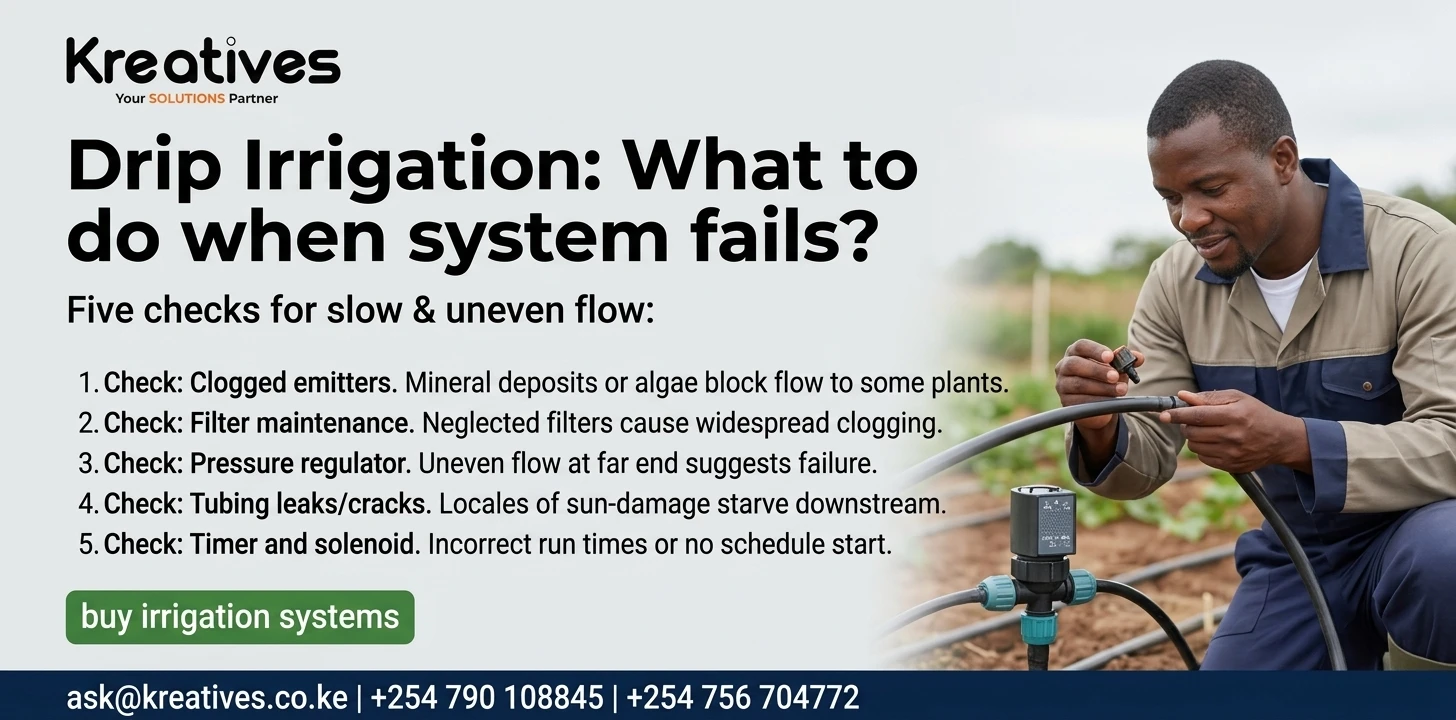
Drip Irrigation Clogging or Uneven Flow? The Fixes That Actually Work
Why Your Water Pump Lost Pressure - And the 5 Spare Parts That Usually Fix It
Generator Won't Start? Run Through These 6 Spare Parts Before You Call a Technician