


Choosing the Perfect Car Washing Machine in Kenya: Price, Features, and Quality Explained
Pressure washers, water usage, power source, and the brands that actually hold up to daily commercial use.
Why a Car Washing Machine Beats Hand Washing
Hand washing uses 100–150 litres of water per car. A high-pressure washer uses 30–50 litres and does the job in a third of the time, with better results. For a commercial car wash, that difference compounds fast — lower water bills, more cars per hour, and consistent quality every wash.
The Main Types of Car Wash Machines in Kenya
1. Electric pressure washers
The most common home and small-business option. Plug into a standard socket, produce 100–200 bar of pressure, and cost KSh 12,000–45,000 depending on brand and power. Best for: home use, small car washes, indoor bays.
2. Petrol pressure washers
Engine-driven, mobile, and powerful. Produce 150–250 bar with no need for mains power. Cost KSh 35,000–85,000. Best for: mobile car washes, sites without reliable electricity, commercial use.
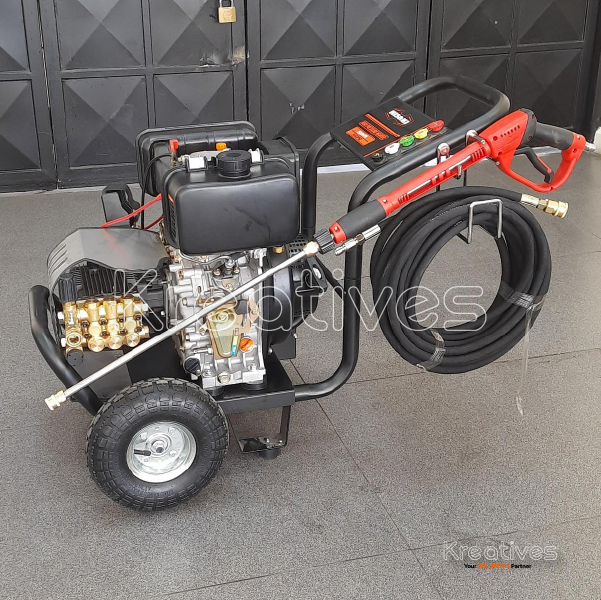
3. Diesel pressure washers
The heavy-duty end of the market. 200–500 bar, designed to run all day. Cost KSh 90,000–400,000+. Best for: fleet washing, industrial cleaning, high-volume car wash businesses.
4. Automatic / tunnel car wash machines
Fully automated systems where the car is driven through. Installation cost starts at KSh 2M+. Best for: high-traffic commercial car wash businesses.
What to Look For in Any Car Wash Machine
- Pressure and flow rate: Pressure cleans; flow carries dirt away. Look for a machine with both 130+ bar and 8+ L/min for serious work.
- Nozzle attachments: A rotating turbo nozzle and a fan nozzle are the two you will actually use daily.
- Detergent tank: Built-in foam cannon or detergent intake saves a step on every wash.
- Hose length and quality: 8–10 metres of steel-braided hose beats 15 metres of cheap PVC every time.
- Build quality: Brass pump heads, stainless fittings, and metal chassis for commercial use. Plastic is fine for home.
- Warranty: 12–24 months is standard. Commercial-use machines with 24-month warranties are worth the premium.
- Spares network: The pump seals, unloader valve, and nozzles are the wear items. Confirm they are stocked locally before buying.
Car Wash Machine Prices in Kenya (2025)
| Type | Typical Range | Best Use Case |
|---|---|---|
| Basic electric (home) | KSh 12,000 – 22,000 | 1–2 cars/week at home |
| Premium electric (semi-pro) | KSh 25,000 – 55,000 | Small car wash, 5–15 cars/day |
| Petrol pressure washer | KSh 35,000 – 85,000 | Mobile, off-grid, mid-volume |
| Diesel pressure washer | KSh 90,000 – 400,000 | Fleet, industrial, high-volume |
The Five Parts That Actually Fail
Before you replace a car wash machine, check these wear items — they solve most complaints:
- High-pressure seals and O-rings — leaks from the pump head, slow pressure loss
- Unloader valve — pressure surges or fails to build on start-up
- Nozzle or spray tip — widened spray pattern feels like lost pressure
- Inlet water filter — clogged filter causes cavitation and pressure loss
- Pump oil — low or degraded oil wears pistons and seals fast
Buying Tips for Kenyan Buyers
- Buy for your duty cycle, not your budget. A cheap machine that fails in 6 months costs more than the right machine that lasts 5 years.
- Ask for water consumption figures. Litres per minute matters as much as pressure when you are paying for water.
- Test before you commit. Any serious supplier will let you see the machine run.
- Confirm the spares network. Seals, unloaders, and nozzles should be locally available.
- Check the warranty terms. Commercial-use warranties are often shorter than home-use warranties on the same machine — know which one applies to you.